Camera Flash For Leica Explained: A UK Buyer's Guide
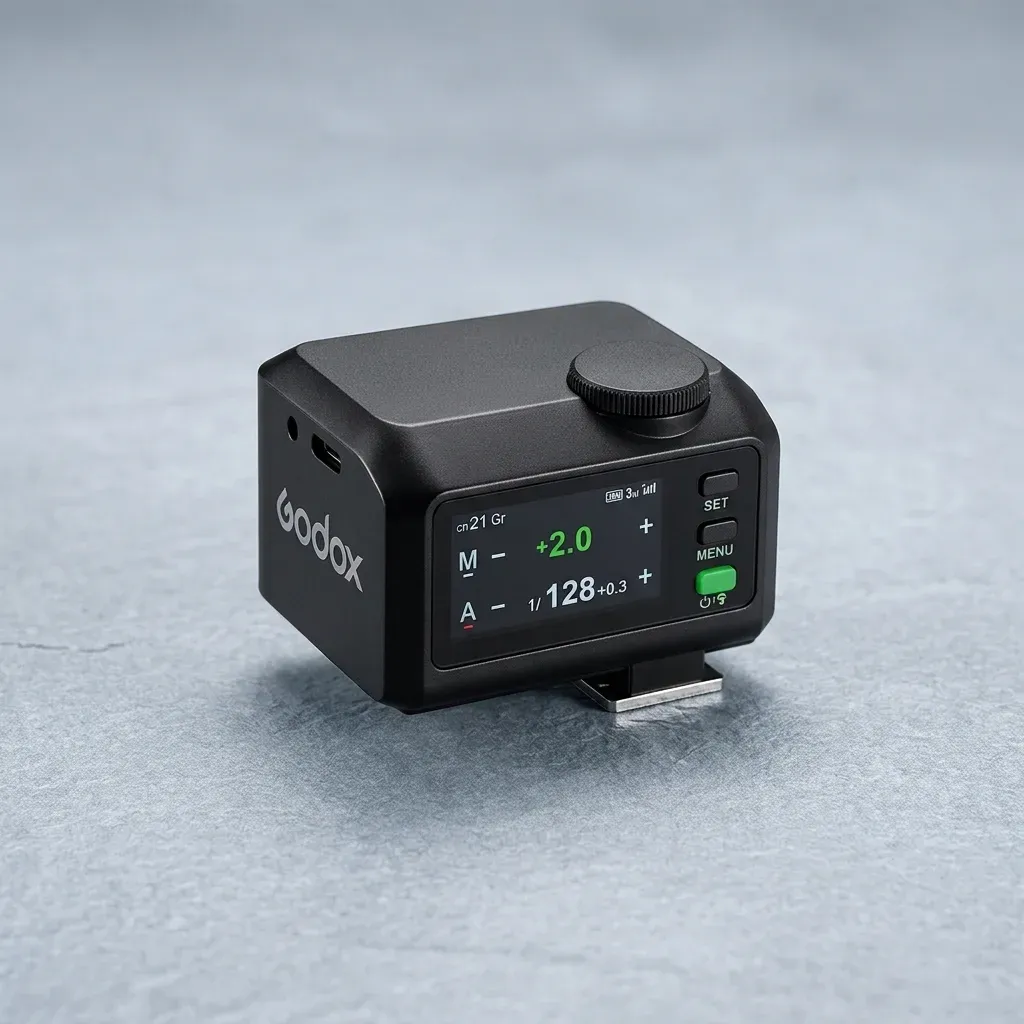
Short answer: choose a camera flash for Leica only after confirming the exact camera body, hot-shoe communication and whether you require Leica-compatible TTL or high-speed synchronisation. A centre-contact manual flash may fire on some bodies but will not automatically provide dedicated exposure functions.
Flash output is only one part of the decision. camera flash for Leica bodies must also balance head movement, controls, radio triggering, battery endurance and the way you photograph.
What should UK buyers compare?
| Feature | Why it matters | Buying check |
|---|---|---|
| Camera compatibility | Determines firing, TTL and high-speed sync | Check exact body and firmware, not only brand |
| Output and recycle | Affects working distance and shooting pace | Compare guide number at the same zoom and recycle at full power |
| Head movement | Controls bounce and modifier use | Look for practical tilt, swivel and locking |
| Battery system | Affects endurance, charging and replacement cost | Check approved charger, spare availability and transport |
TTL, manual flash and high-speed sync
Dedicated TTL meters a pre-flash through the camera, but support differs between Leica systems and flash versions. Manual control is predictable once power and distance are set. High-speed sync allows faster shutter settings at the cost of effective output and battery use; verify it for the exact body.
Reading output specifications
Guide numbers are comparable only at the same ISO and zoom setting. A high number at a narrow zoom does not describe broad bounce lighting. Also compare minimum power, power-step granularity, recycle indication and thermal protection for repeated shooting.
Controls, bounce and wireless use
A tilting and swivelling head makes ceiling or wall bounce practical where surfaces are neutral and suitable. Radio control is more reliable than optical triggering when line of sight is blocked, but transmitter and receiver ecosystems must match. Check menu readability and physical controls with gloves if you work outdoors.
Rechargeable battery safety
Use only the battery and charger approved for the flash, and stop using packs that are swollen, damaged, unusually hot or behaving erratically. Charge on a stable surface away from escape routes and do not cover the charger. OPSS lithium-battery safety guidance gives UK safety principles for compatible chargers and supervised charging.
Quick buying checklist
- Verify the exact camera body and firmware support
- Decide whether TTL and high-speed sync are essential
- Compare guide numbers at equivalent zoom settings
- Check full-power recycle time and thermal limits
- Test head tilt and swivel for your modifiers
- Price spare approved batteries and replacement chargers
- Buy from a supplier with clear UK support
FAQ
Can any hot-shoe flash be fitted?
Physical fit does not guarantee safe electronic compatibility or dedicated functions. Check both camera and flash documentation.
Is TTL better than manual flash?
TTL is convenient when distance changes; manual is often more repeatable in controlled lighting. Many photographers use both.
Can a flash be charged over USB while shooting?
Only when the manufacturer explicitly supports that workflow. Do not improvise power connections.
How many photographs will one charge provide?
It varies greatly with power level, temperature, battery age and use of modelling or wireless functions. Treat headline counts as test-condition figures.
Final buying advice
Choose camera flash for Leica bodies by verified compatibility, controllable light and a supported battery system. Reliable recycle behaviour and intuitive controls usually matter more in practice than the largest headline guide number.
Ready to elevate your lighting with ProL?
Explore the M-Series — £142.74