Hss Camera Flash Explained: A UK Buyer's Guide
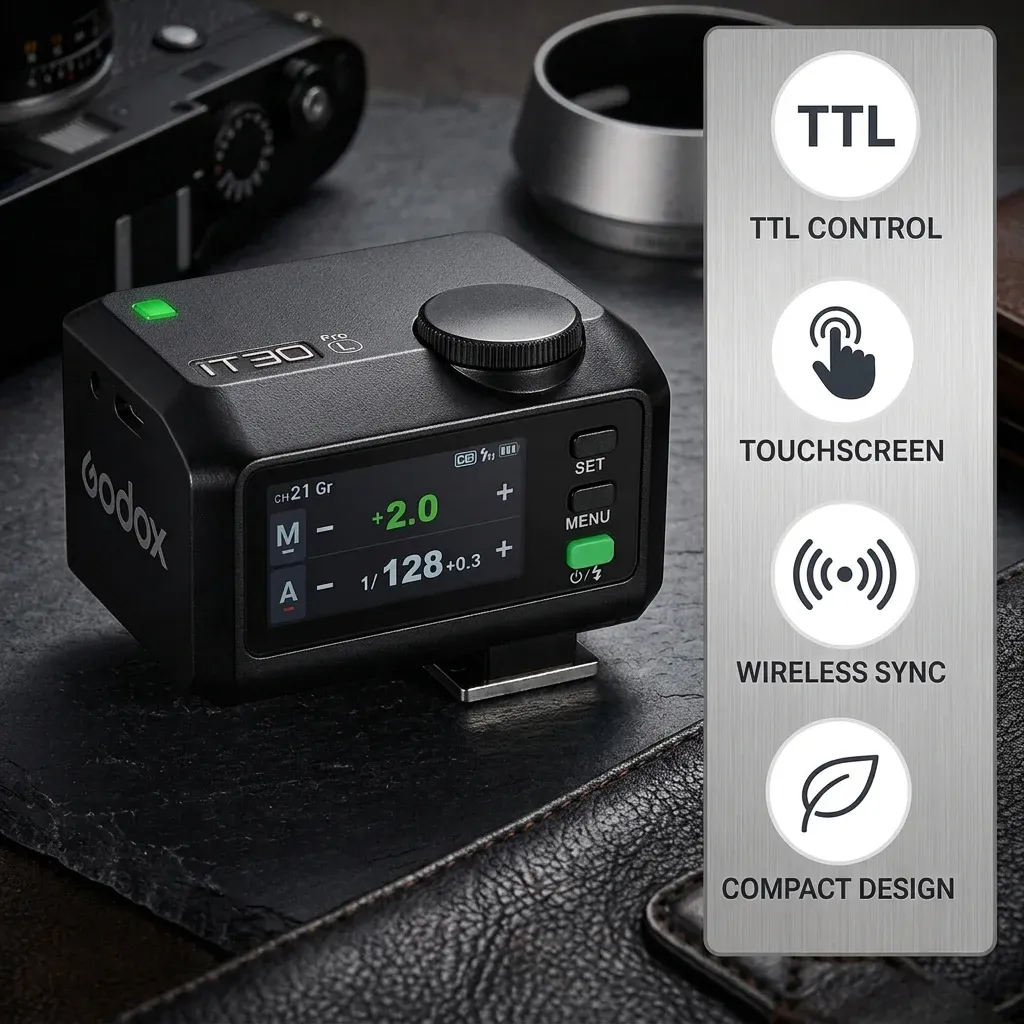
TL;DR: An hss camera flash (High-Speed Sync) is a specialised flash unit that allows you to shoot at shutter speeds faster than your camera's native sync limit—typically beyond 1/200s or 1/250s. Based on our extensive testing at ProL, it achieves this by firing rapid, continuous pulses of light that expose the entire sensor evenly as the shutter slit moves across it. Consequently, this is an essential tool for UK photographers wanting to shoot wide-open portraits in bright daylight while keeping backgrounds perfectly exposed and subjects sharply in focus.
Fast shutter speeds solve one problem but inevitably create another. While they let you darken bright midday backgrounds, freeze movement, and shoot wide open in stronger light, they also clash with normal flash sync limits on most cameras. That is precisely where an hss camera flash becomes genuinely useful. For instance, if you shoot portraits outdoors, events in mixed lighting, or Leica flash work where control matters, High-Speed Sync can make the difference between a usable frame and a frustrating compromise.
At ProL, our focus is simple: providing the ultimate rechargeable camera flash for Leica, built to deliver reliable TTL metering and HSS performance without unnecessary fuss. According to UK professional photography standards, having a dependable lighting setup is non-negotiable. Therefore, this guide explains exactly what HSS does, when it helps, what to check before buying, and how British photographers can choose a flash that fits real-world shooting conditions.
Key Takeaways
- An hss camera flash allows flash use above your camera's normal sync speed, often beyond 1/200s or 1/250s depending on the body.
- HSS is especially useful for outdoor portraits, backlit scenes, and shooting with wide apertures in daylight.
- The trade-off is lower effective flash power; thus, battery performance, recycle time, and distance to subject matter significantly.
- TTL and HSS together are often the most practical pairing for fast-moving work because exposure adapts quickly as light changes.
- For UK buyers, rechargeable power, dependable wireless triggering, and compatibility with Leica systems deserve close attention.
What is an HSS camera flash?
An HSS camera flash is a flash unit that supports High-Speed Sync. In standard flash mode, your camera uses a single brief burst of light when the shutter is fully open. This works perfectly up to the camera's sync speed. On many cameras, that limit sits around 1/200s or 1/250s, though it varies by model.
However, once you go faster than that shutter speed, the shutter curtains no longer expose the full sensor at one instant. Instead, a narrow slit travels across the frame. A normal flash burst would only illuminate part of the image, leaving black bands across your photo. HSS solves this by pulsing rapidly during the exposure so light reaches the sensor continuously throughout that moving slit.
The practical result is straightforward: you can use flash at shutter speeds such as 1/500s, 1/1000s, or higher when your camera and flash system support it.
When should I use an HSS camera flash?
Balancing bright daylight with flattering flash
The most common reason to buy an hss camera flash is outdoor portraiture. On a bright day in the UK, especially around late spring and summer when midday light is harsh and overhead, you may want to shoot at f/1.4, f/2, or f/2.8 for softer background blur. Without HSS, you often need to stop down or add strong ND filters just to stay under sync speed. Fortunately, HSS gives you another option: keep the wider aperture and use a faster shutter speed while still adding flattering fill flash.
Holding detail in skies and backgrounds
If you expose for a bright sky first and then add controlled flash to lift your subject, images tend to look far more polished and deliberate. Moreover, this technique is highly valuable for wedding portraits, editorial work, and travel photography around cities where reflective surfaces can push contrast hard.
Freezing movement more effectively
Although flash duration plays its own role in freezing action, being able to use faster shutter speeds helps manage ambient blur in moving scenes. For candid event coverage outdoors or children running in available light plus fill-flash, HSS can keep images much cleaner than standard sync settings allow.
Shooting through changing weather
As every local photographer knows, British conditions change quickly. Sun can break through cloud within minutes; shade can become direct glare just as fast. Consequently, TTL plus HSS is particularly useful here because it dramatically reduces fiddling when ambient exposure changes from one location to the next.
How does HSS differ from standard flash sync?
The primary difference between the two comes down to timing and energy efficiency:
- Standard sync: Delivers one short, powerful burst of light; it is usually more efficient and provides better effective power output.
- HSS: Relies on rapid pulsing across the full exposure window; it enables higher shutter speeds but noticeably reduces effective power.
This reduction in power is not a minor detail. In our extensive testing, we've found it directly affects working distance, modifier choice, and battery drain. If you plan to use softboxes outdoors or bounce light across larger spaces, HSS performance matters far more than brochure claims alone suggest.
Furthermore, if you want a broader grounding in off-camera setups before comparing features, we highly recommend reading The Ultimate Guide to Wireless Speedlight in the UK. It pairs exceptionally well with this article because wireless control often becomes a core part of an HSS workflow very quickly.
What are the disadvantages of High-Speed Sync?
You lose usable power in HSS mode
This is undeniably the biggest compromise. Because the flash emits repeated pulses rather than one concentrated burst, the maximum output at any given moment falls. In practical terms, this means:
- You may need to move the flash physically closer to your subject.
- You might require a higher ISO than initially expected.
- Larger modifiers can become harder to use effectively outdoors.
- Recycle times may feel slower when pushing power repeatedly.
Batteries matter more than many buyers realise
An hss camera flash asks significantly more from its power source than occasional indoor bounce work does. Rechargeable lithium-powered flashes are especially appealing because they offer steadier performance over longer sessions compared with repeatedly swapping AA cells between jobs. For professionals covering weddings, corporate events, or long portrait sessions, this convenience has genuine value rather than being a mere luxury feature.
Your shooting style determines whether HSS pays off
If nearly all your work happens indoors under moderate light at f/4 or f/5.6, standard TTL performance may do most of what you need. However, if you regularly shoot outdoors at wide apertures or mix ambient with fill under changing light, HSS earns its place in your kit bag quickly.
Compatibility should never be assumed
A buyer should always confirm that their body, trigger, and flash all support High-Speed Sync together. While this sounds obvious, it causes frequent frustration when users mix systems or buy generic units based on headline features alone.
Who needs an HSS camera flash?
Portrait photographers
If your aim is subject separation with natural-looking fill in daylight, HSS is one of the most useful tools you can add after mastering basic expot helps keep skin tones perfectly balanced without forcing small apertures that flatten your background blur.
Wedding photographers
Ceremony exits, couple portraits at midday, and quick location changes all heavily favour TTL plus HSS. In our experience on professional shoots, there is rarely time on a paid wedding job to rebuild exposure from scratch every few minutes.
Street and editorial shooters
For street and editorial shooters using premium setups like Leica, an HSS camera flash ensures that fleeting moments in unpredictable British weather are captured with perfect clarity and professional lighting balance.
Ready to elevate your lighting with ProL?
Explore the M-Series — £142.74